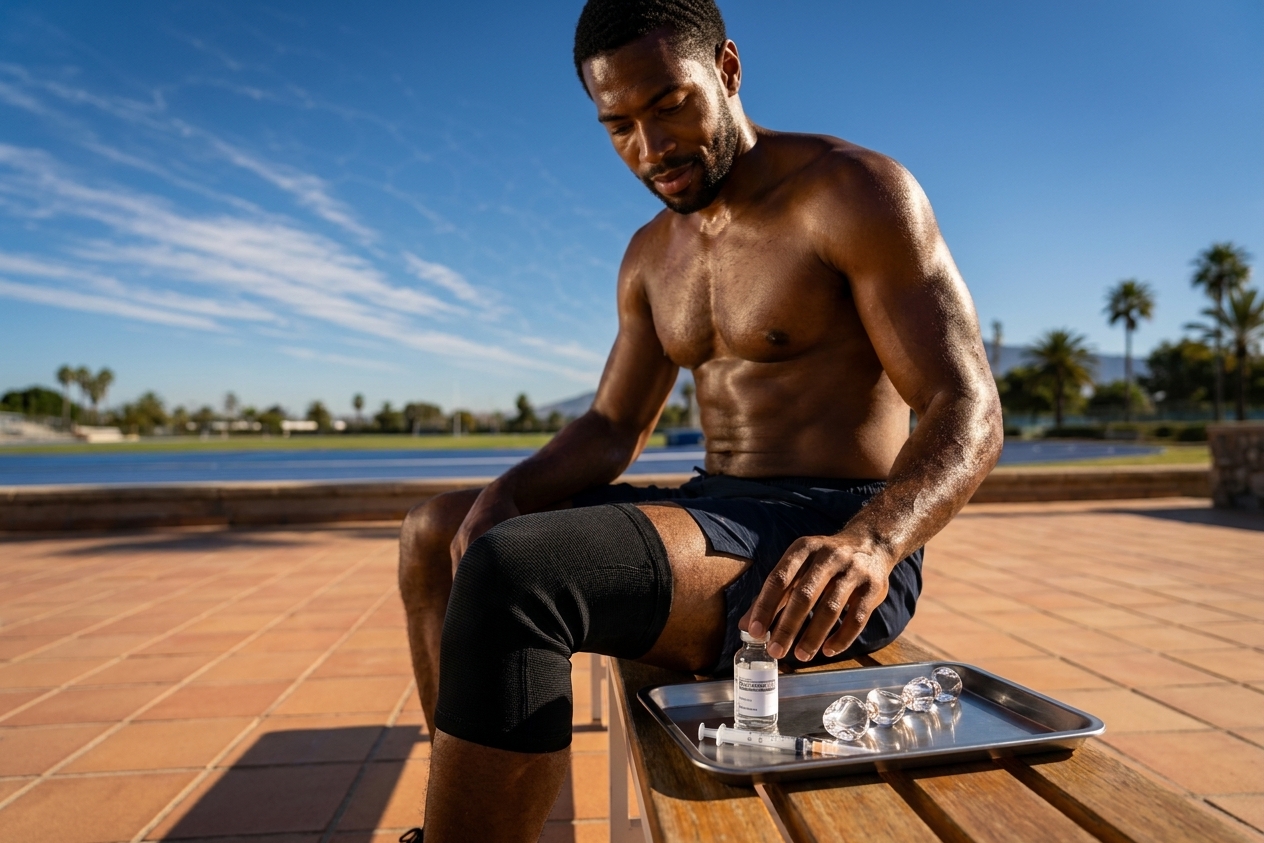
BPC-157 shows up in nearly every injury recovery thread on Reddit and TikTok right now, promising faster tendon and ligament healing without surgery. This guide breaks down who it actually fits, what a legitimate protocol looks like in 2026, and where it stacks up against supervised peptide and hormone therapy you can actually get prescribed.
- BPC-157 injury recovery claims outrun the regulatory reality: compounding pharmacies can't legally source it in 2026.
- Self-sourced BPC-157 from research-chemical sites: Skip. No lab verification, no clinician oversight, no accountability.
- Sermorelin and TRT protocols under licensed telehealth review: Consider for recovery support with real monitoring.
- FDA's compounding advisory committee flagged BPC-157 safety data gaps in 2024 - that call still stands in 2026.
Why this matters
BPC-157 is a 15-amino-acid peptide first synthesized from a protein found in gastric juice back in the 1990s. It never went through FDA drug approval, and it's not sitting on any pharmacy shelf with a package insert.
That gap between hype and regulatory status is exactly why a licensed clinician review matters more here than with almost any other peptide people ask about. Athletes and weekend warriors want faster tendon and ligament recovery. What most of them find instead is a research-chemical market with zero oversight and wildly inconsistent purity between vendors.
Who this is for
This guide is for adults dealing with a slow-healing tendon, ligament, or soft-tissue injury who've heard BPC-157 mentioned online and want to know if it's a real option or a research-chemical rabbit hole. It's written for people who already have some physical therapy or medical care in place and are trying to figure out what, if anything, adds to that plan safely in 2026.
What to look for in BPC-157 for injury recovery
Medical oversight and a real prescription pathway
Anything injected into your body for injury recovery should come with a clinician who reviews your history first. Without that step, you're guessing at dosing and ignoring interactions with other medications or hormone therapy you may already be on.
Regulatory status and sourcing legitimacy
BPC-157 is not on the FDA's approved list for compounding pharmacies. In 2024, the FDA's Pharmacy Compounding Advisory Committee reviewed it for inclusion and recommended against adding it, citing gaps in human safety data. That recommendation still governs sourcing in 2026, which means a legitimate US compounding pharmacy generally cannot fill a BPC-157 prescription the way it can for testosterone or sermorelin.
Third-party lab verification
Research-chemical vendors selling "research use only" BPC-157 rarely publish independent certificates of analysis. Purity, concentration, and contamination all vary between batches and sellers, and there's no regulatory body checking any of it.
Dosing protocol fit for the injury type
Tendon injuries, ligament sprains, and post-surgical healing all call for different timelines and different monitoring. A generic online dosing chart copied from a forum post doesn't account for your specific injury, weight, or existing conditions.
Interaction check with existing hormone or peptide therapy
If you're already on testosterone replacement, sermorelin, or another peptide protocol, adding an unregulated compound on top without clinician review is how side effects go unnoticed until they're a problem.
How BPC-157 compares to supervised recovery therapies
The risky shortcut: self-sourced BPC-157 from research-chemical sites. No prescription, no clinician screening, no lab-verified purity. Prices are low specifically because there's no oversight built into the cost. Verdict: Skip.
The gray zone: compounded BPC-157 through a US pharmacy. Some compounding pharmacies still list it, but the FDA's 2024 advisory committee call against inclusion on the approved bulks list means this sits in a legally murky spot heading into 2026. Verdict: Wait until the regulatory picture clears.
The supervised alternative: growth hormone-supportive peptide therapy. Sermorelin injections work through your pituitary to support natural growth hormone release, which plays a role in tissue repair and recovery capacity. It's prescribed, monitored, and dosed against actual lab work rather than a forum thread. Verdict: Consider if your recovery is tied to declining GH output as much as the injury itself. Full growth hormone therapy protocols follow the same logic for adults with a confirmed deficiency.
The root-cause fix: TRT-linked recovery support. Low testosterone slows soft-tissue healing and drags out recovery timelines in men over 40. Online TRT for men over 40 with lab-confirmed low T and ongoing monitoring addresses a mechanism that's actually documented, rather than chasing a peptide with no approved indication. Verdict: Consider if bloodwork backs it up.
What to avoid
- "Research use only" vials marketed for personal injection. That label exists so vendors avoid drug regulation, not because the product is safer for lab use.
- Dosing advice from injury-recovery forums. A protocol that worked for one person's Achilles tendon says nothing about your rotator cuff or your bloodwork.
- Stacking BPC-157 on top of unmonitored hormone therapy. Combining unregulated peptides with testosterone or growth hormone protocols without clinician review hides side effects until they're bigger problems.
Verdict comparison
| Pathway | Medical oversight | Regulatory status (2026) | Verdict |
|---|---|---|---|
| Self-sourced BPC-157 | None | Unregulated research chemical | Skip |
| Compounded BPC-157 (pharmacy) | Varies | Not on FDA's approved bulks list (2024 recommendation) | Wait |
| Sermorelin peptide therapy | Licensed clinician | FDA-recognized compounding pathway | Consider |
| TRT recovery protocol | Licensed clinician, lab-monitored | FDA-approved hormone therapy | Consider |
If the crank takes more than a forum thread's worth of research to explain your dosing, you're not ready to inject it.
FAQ
What is BPC-157 used for in injury recovery?
BPC-157 is marketed for tendon, ligament, and soft-tissue healing, but it has no FDA-approved indication for any use in humans. Interest spiked through fitness and biohacking communities, not through clinical approval.
Is BPC-157 legal in 2026?
It's sold as a research chemical, not an approved drug, and the FDA's compounding advisory committee recommended against adding it to the approved bulks list in 2024. That leaves most US sourcing in a gray or unregulated zone through 2026.
Can a doctor prescribe BPC-157?
Most licensed telehealth and compounding pharmacies won't fill a BPC-157 prescription because of its unresolved regulatory status. Clinicians can instead evaluate whether therapies like sermorelin or TRT address the underlying recovery issue.
How is BPC-157 typically administered?
Online sellers market it as a subcutaneous injection, dosed daily or every other day. Without clinician oversight or lab-verified purity, there's no reliable standard for concentration or technique.
Does BPC-157 work faster than physical therapy alone?
There's no approved clinical data confirming that in humans. Physical therapy, combined with addressing underlying hormone deficiencies when present, remains the documented approach for soft-tissue recovery.
Is BPC-157 the same as growth hormone peptides like sermorelin?
No. Sermorelin works through the pituitary to support natural growth hormone release and has a defined prescribing pathway, while BPC-157 has no approved mechanism review or FDA compounding status.
How much does BPC-157 cost?
Pricing varies widely between unregulated research-chemical vendors and compounding pharmacies, with no consistent standard tying cost to purity or dosing accuracy. Low price from an unverified seller is not a good sign.
Is BPC-157 safe to combine with TRT?
Combining any unregulated peptide with an active hormone protocol without clinician review risks masking side effects. A licensed provider should evaluate your full regimen before adding anything new.
One last thing
The FDA's 2024 advisory committee decision on BPC-157 wasn't a ban, it was a "not enough safety data yet" call, and that distinction gets lost in most recovery forums. Going into 2026, the more defensible move for slow-healing injuries is ruling out a hormone deficiency first, since low testosterone and low growth hormone both measurably slow tissue repair and both have approved, monitored treatment pathways.